Dutch semiconductor equipment manufacturer ASML has reported record quarterly sales as growing demand for artificial intelligence (AI) chips drives investment in advanced semiconductor manufacturing.
The company recorded €11.7 billion in net sales and €5.0 billion in net income in the third quarter of 2026. Net sales increased from €7.5 billion in the same quarter last year, while net income more than doubled from €2.1 billion.
ASML also raised its full-year 2026 sales forecast to €44 billion to €45 billion, reflecting continued demand for equipment used to manufacture advanced chips. The company said customers are increasing their short- and medium-term equipment requirements as investment in AI infrastructure expands. <Cite refs={["turn679297search1","turn679297search0"]}/>
Why Is AI Driving ASML's Growth?
AI systems require powerful processors and advanced memory chips to train models, process information, and deliver services. Semiconductor manufacturers are investing in production capacity to meet this demand.
ASML supplies the sophisticated lithography machines used to manufacture advanced semiconductors. Its extreme ultraviolet (EUV) lithography systems are particularly important for producing some of the world's most advanced chips.
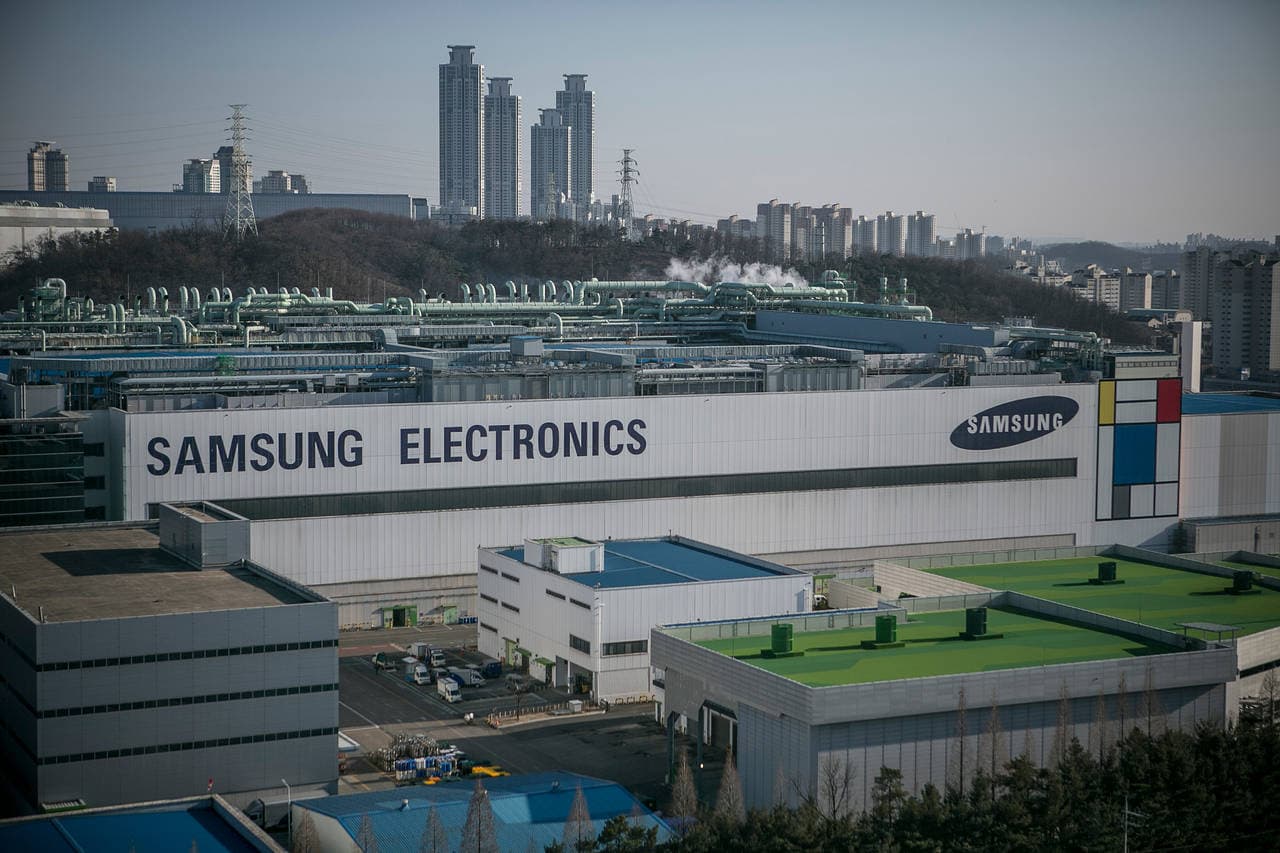
The company's equipment is used by major semiconductor manufacturers, including TSMC, Samsung, and Intel. As these manufacturers expand their production capabilities, demand for ASML's machines and related services increases.
This positions ASML as an important supplier in the AI ecosystem, even though it does not manufacture AI processors itself.
Record Revenue and Stronger Financial Outlook
ASML's third-quarter results exceeded the lower end of its earlier expectations and reflected strong demand for both new equipment and services.
Key financial highlights include:
Q3 2026 net sales: €11.7 billion.
Q3 2026 net income: €5.0 billion.
Gross margin: 57.5%.
Q4 2026 sales forecast: €14.2 billion to €15.2 billion.
Full-year 2026 sales forecast: €44 billion to €45 billion.
The company attributed part of its strong gross margin to demand for services and productivity upgrades for customers' existing equipment. These upgrades help semiconductor manufacturers improve the performance and output of their installed machinery. <Cite refs={["turn679297search1"]}/>
Chipmakers Are Planning for Demand Beyond 2026
ASML's outlook suggests that semiconductor investment is not limited to immediate AI infrastructure requirements.
According to CEO Christophe Fouquet, some customers are already expressing interest in placing equipment orders for 2029 and even 2030. This indicates that chipmakers are considering their capacity requirements several years ahead.
However, ASML warned that its currently planned supply may not fully meet customer demand in 2027 and 2028. The company is investigating ways to increase production capacity beyond previously announced expansion plans.
The situation highlights a challenge for the semiconductor industry: manufacturing advanced chipmaking equipment requires specialised engineering, complex components, and long production lead times.
Why ASML Matters to the Global AI Industry
ASML occupies a strategically important position in semiconductor manufacturing because its EUV systems enable the production of leading-edge chips.
These chips support a wide range of technologies, including AI accelerators, data centre processors, smartphones, and other advanced computing systems.
As investment in AI infrastructure grows, demand for semiconductor manufacturing equipment can increase alongside demand for processors and memory.
This also means that constraints in equipment production can affect how quickly chipmakers expand capacity, potentially influencing the wider AI supply chain.
Challenges Facing ASML
Despite its strong results, ASML faces several challenges.
Production capacity: The company needs to expand manufacturing to address demand that may exceed its current plans.
Geopolitical restrictions: Export controls affecting advanced semiconductor technology, particularly sales involving China, remain a source of uncertainty.
Industry cycles: Semiconductor demand can fluctuate, and manufacturers' investment plans may change if AI spending slows or market conditions deteriorate.
Long-term uncertainty: Strong demand today does not guarantee that the current pace of investment will continue indefinitely.
ASML's results provide evidence of sustained customer demand, but future growth will depend on execution, customer spending, and broader market conditions.
What This Means for the AI Industry
ASML's performance demonstrates that the AI boom is creating economic opportunities across the technology supply chain, not just for companies developing AI models and applications.
Chipmakers, equipment manufacturers, cloud providers, and data centre operators are all investing to support growing computing requirements.
For businesses, the development highlights the importance of semiconductor capacity in the long-term expansion of AI. For technology investors and industry observers, ASML's order outlook offers another indicator of how manufacturers view future demand for advanced chips.